
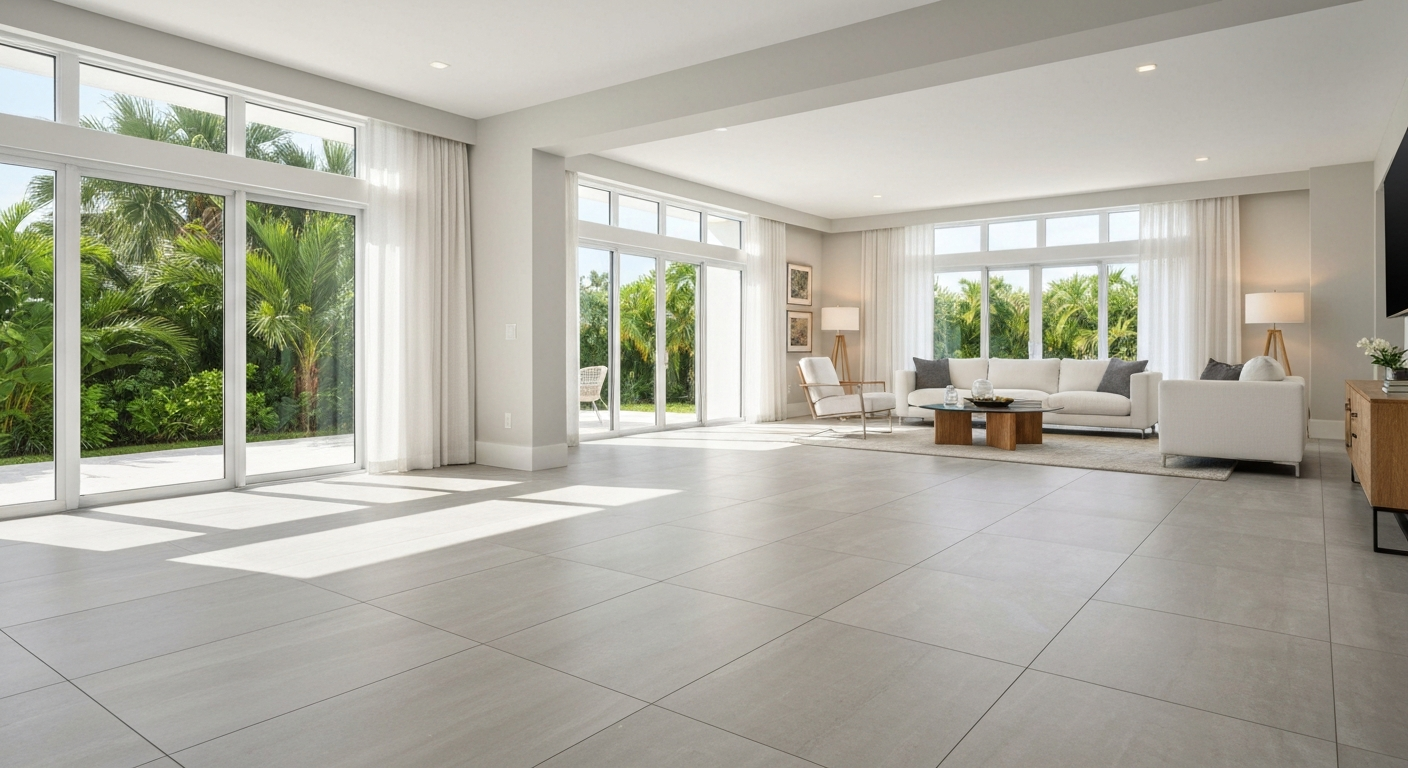
Why Miami's Climate Matters When Choosing Flooring
If you've ever walked barefoot across a warped hardwood floor or watched grout lines darken with mildew after a rainy season, you already know: not all flooring is built for Miami. Our subtropical climate — with its year-round humidity, intense heat, and occasional flooding from summer storms — puts serious demands on the materials underfoot.
Choosing the right flooring for your Miami home isn't just about aesthetics. It's about finding a material that can handle moisture, resist heat, and still look great years down the road. Whether you're remodeling your kitchen, updating a bathroom, or refreshing your entire first floor, the flooring decision is one of the most important choices you'll make.
Here's what we recommend to homeowners across Miami, Coral Gables, Coconut Grove, and surrounding neighborhoods — and what we'd steer you away from.
The Biggest Threat to Your Floors: Humidity
Miami's average relative humidity hovers between 70% and 80% throughout the year. That level of moisture in the air can cause certain materials to expand, warp, buckle, or develop mold over time. Even with air conditioning running constantly, moisture finds its way in — especially in older homes or during the wet season from May through October.
This is why material selection matters more here than it does in drier climates. A flooring choice that works perfectly in Denver or Phoenix might fail within a few years in South Florida.
Best Flooring Options for Miami Homes
Porcelain and Ceramic Tile
Tile has been the go-to flooring in South Florida for decades, and for good reason. Porcelain and ceramic tile are virtually impervious to moisture, easy to clean, and available in an enormous range of styles — including options that convincingly mimic natural wood or stone.
Porcelain tile, in particular, is denser and more water-resistant than standard ceramic, making it an excellent choice for kitchens, bathrooms, and entryways. Large-format tiles with rectified edges can give your space a sleek, modern look while minimizing grout lines where moisture and grime can collect.
- Pros: Extremely durable, moisture-proof, low maintenance, wide variety of styles
- Cons: Can feel hard underfoot, requires professional installation for best results, grout needs periodic sealing
Luxury Vinyl Plank (LVP)
Luxury vinyl plank has become one of the most popular flooring choices in Miami remodels over the past several years. Modern LVP is 100% waterproof, comfortable underfoot, and available in realistic wood-look finishes that are difficult to distinguish from the real thing.
For homeowners who love the warmth and character of hardwood but need something that can handle Miami's humidity, LVP offers the best of both worlds. It's also more affordable than tile or natural wood, making it a smart choice for larger projects.
- Pros: Waterproof, comfortable, affordable, easy to maintain, realistic wood and stone looks
- Cons: Can be damaged by heavy impacts, quality varies significantly between brands, not as long-lasting as tile
Natural Stone
Materials like travertine, slate, and marble bring undeniable elegance to Miami homes. Natural stone is durable, cool underfoot in the heat, and adds real value to a property. It's a popular choice in Coral Gables and Pinecrest homes where classic design is a priority.
However, natural stone requires more maintenance than tile or vinyl. Most stone is porous and needs to be sealed regularly to prevent staining and moisture absorption. It's also one of the more expensive flooring options, both in material and installation costs.
- Pros: Beautiful and unique, adds home value, naturally cool, extremely durable
- Cons: Requires sealing, higher cost, can be slippery when wet unless honed or textured
Polished Concrete
For homeowners going for a modern or industrial aesthetic, polished concrete is worth considering. It handles humidity without issue, is incredibly durable, and can be stained or scored to create custom patterns. Many Miami homes — especially newer builds and loft-style spaces — use polished concrete to great effect.
- Pros: Moisture-resistant, low maintenance, modern look, long-lasting
- Cons: Hard underfoot, can crack if the foundation shifts, limited warmth and softness
Flooring to Think Twice About in Miami
Traditional Hardwood
We understand the appeal. Solid hardwood floors are beautiful, timeless, and add warmth to any room. But in Miami's climate, they're a risky investment. Solid wood expands and contracts with humidity changes, leading to gaps in dry months and buckling during the wet season. Even with climate control, many homeowners in South Miami and Kendall have experienced costly hardwood failures.
If you're set on real wood, consider engineered hardwood instead. It's constructed with a plywood core that resists moisture better than solid planks, though it still isn't fully waterproof. Engineered hardwood works best in climate-controlled spaces that don't see direct water exposure.
Carpet
Wall-to-wall carpet is generally not recommended for Miami homes, especially in common areas, kitchens, or bathrooms. Carpet traps moisture, promotes mold and mildew growth, and can develop odors in humid environments. If you want the softness of carpet, consider using area rugs over hard flooring — you get the comfort without the long-term moisture problems.
Laminate
Standard laminate flooring may look like hardwood, but its fiberboard core is highly susceptible to water damage. Even small spills or humidity exposure can cause laminate to swell and delaminate. While waterproof laminate products do exist, they tend to cost nearly as much as luxury vinyl plank, which generally performs better in humid conditions.
Choosing Flooring Room by Room
Not every room in your home has the same demands. Here's a quick guide:
- Kitchen: Porcelain tile or LVP — both handle spills, foot traffic, and humidity with ease
- Bathroom: Porcelain tile is the gold standard; LVP is a solid budget-friendly alternative
- Living areas: LVP, tile, engineered hardwood, or polished concrete depending on your style
- Bedrooms: Engineered hardwood or LVP for warmth; tile if you prefer low maintenance
Installation Quality Matters as Much as Material
Even the best flooring material can fail if it's installed poorly. In Miami's climate, proper subfloor preparation is critical. Moisture testing, leveling, and appropriate underlayment all play a role in how your floors perform over time. Cutting corners during installation — or hiring an inexperienced crew — can lead to problems that show up months or years later.
At Fieldstone Construction Miami, we've installed flooring in homes across Coconut Grove, South Miami, Pinecrest, and beyond. We know what works in this climate because we see it every day. We'll help you choose the right material for your space, your budget, and your lifestyle — and install it the right way so it lasts.
Ready to Update Your Floors?
If you're planning a remodel and flooring is on the list, start by thinking about how each room is used and how much moisture it sees. From there, narrow your options based on style, durability, and budget. And if you'd like expert guidance from a team that knows Miami homes inside and out, we're happy to walk you through your options and provide a straightforward estimate.
Reach out to Fieldstone Construction Miami to start the conversation. No pressure, no gimmicks — just honest advice and quality work.